Image

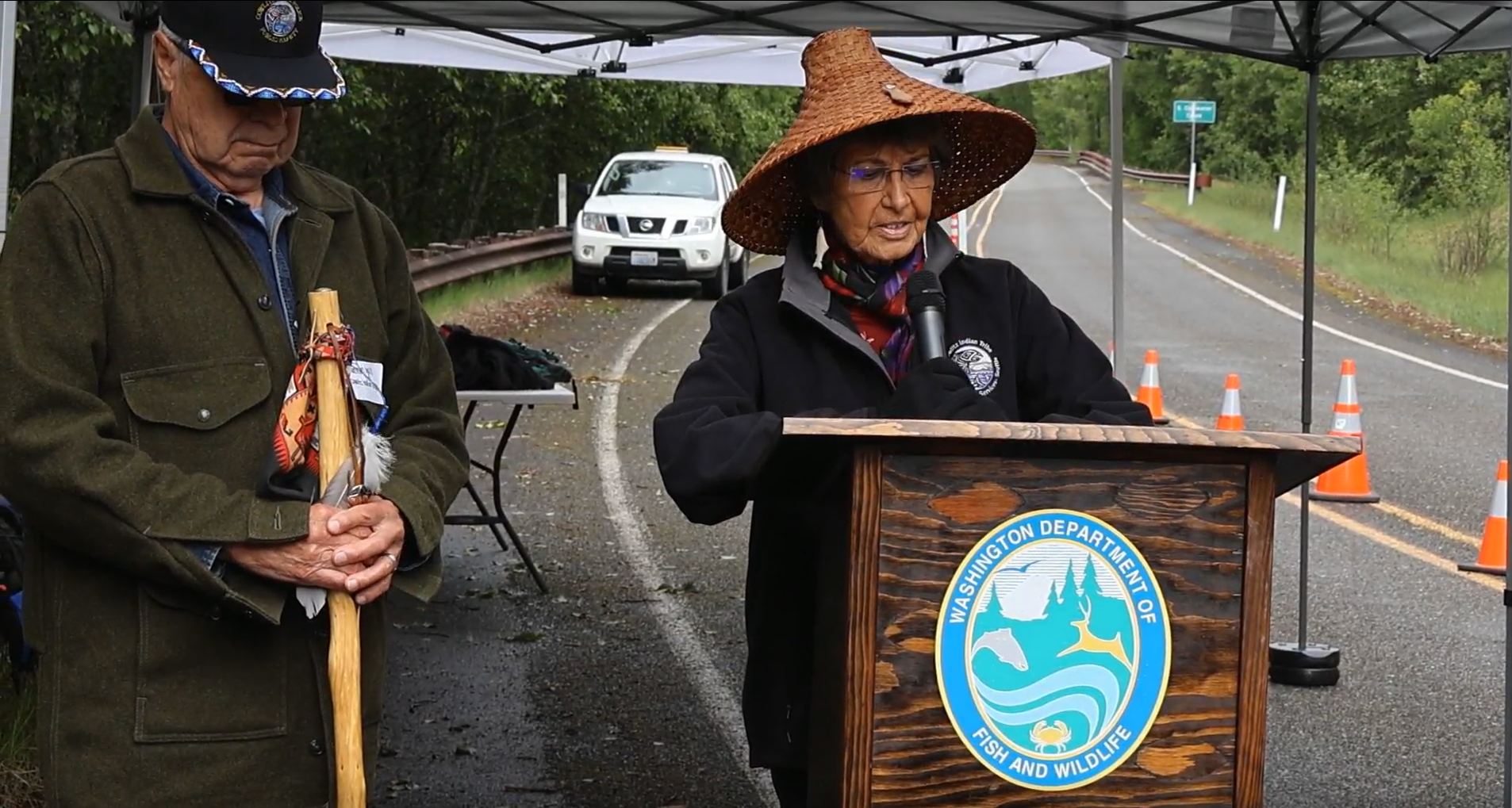
For the first time since 1983, Chinook salmon are swimming in the North Fork Toutle River within the Mount St. Helens National Volcanic Monument, a return the Cowlitz Indian Tribe is calling one of the most meaningful moments in its decades-long work to restore salmon to the waters that have sustained the Tribe for generations.
Cowlitz Tribal leadership and staff from the Tribe’s Natural Resources Department (NRD) joined the Washington Department of Fish and Wildlife (WDFW), the U.S. Forest Service and conservation partners in June for a reintroduction celebration marking the release of 30 hatchery-origin adult spring Chinook salmon into South Fork Coldwater Creek, a tributary of the North Fork Toutle River.
"The reintroduction of Chinook salmon to these waters is incredibly meaningful to the Cowlitz Indian Tribe," said Chairman William (Bill) Iyall. "Salmon have sustained our people culturally, spiritually, and physically, and their return reflects our commitment to caring for the rivers and ecosystems that sustain us all. This was a powerful example of what can be accomplished through partnership and stewardship."
Before Mount St. Helens erupted in 1980, the upper North Fork Toutle River watershed teemed with spring and fall Chinook, coho salmon and winter steelhead. The eruption buried streams and floodplains under volcanic debris, wiping out naturally returning salmon and steelhead populations in the upper watershed almost overnight.
Nearly a decade later, the U.S. Army Corps of Engineers completed the Sediment Retention Structure (SRS) in 1989, which is an earthen dam built to trap volcanic sediment and protect downstream communities from flooding. The SRS has done its job protecting people and infrastructure, but it also cut off upstream fish passage, leaving historical spawning grounds out of reach for returning adult salmon.
The June release is part of the North Fork Toutle River Fish Passage and Reintroduction Plan, developed by WDFW and the Wild Salmon Center to return Chinook to historical spawning and rearing habitat in the upper watershed. Because adult salmon can't pass the SRS on their own, returning fish depend on trap-and-haul operations, where returning fish are collected at the Toutle Fish Collection Facility below the dam, trucked upstream and released into habitat where they can spawn. Their offspring will be able to migrate back downstream past the SRS naturally as they begin their journey to the ocean.
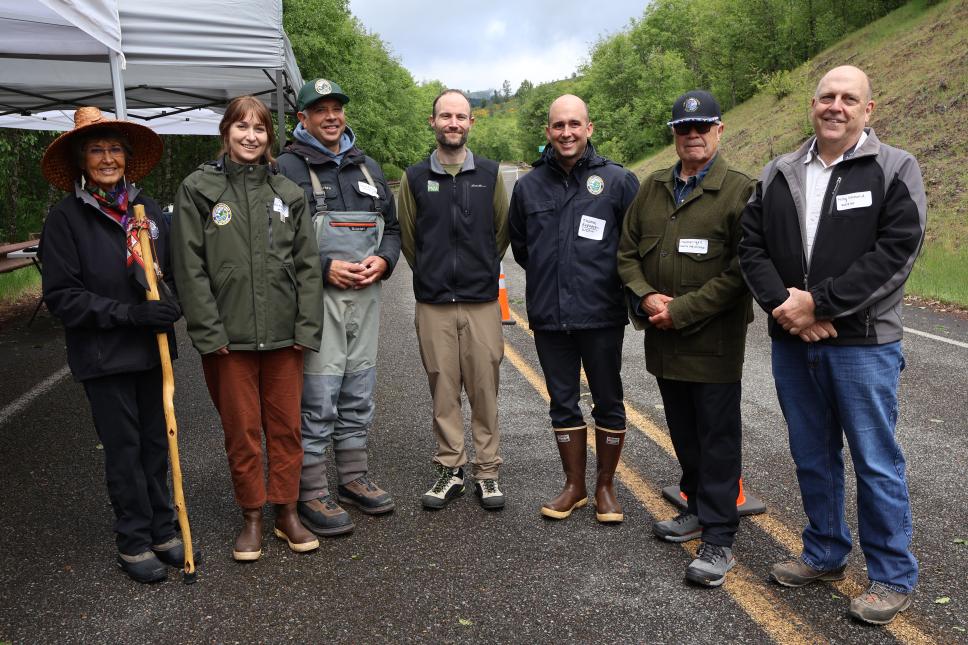
WDFW research scientist Thomas Buehrens called the effort "one of the largest salmon recovery opportunities in the lower Columbia River basin," noting that more than four decades of watershed recovery have finally created conditions capable of supporting salmon and steelhead again. "The goal is not just to move fish upstream, but to establish populations that can use this habitat naturally over time," Buehrens said. "Trap and haul provides a proven and practical path to begin rebuilding populations now while we continue evaluating future fish passage options."
Spring and fall Chinook reintroductions above the SRS began in 2025, and this June's release extended that work into the Mount St. Helens National Volcanic Monument for the first time. Coho and winter steelhead have already been reintroduced in areas above the dam. Going forward, WDFW plans to release up to 600 hatchery-origin adult Chinook each year, roughly 300 spring-run and 300 fall-run fish, throughout the upper watershed.
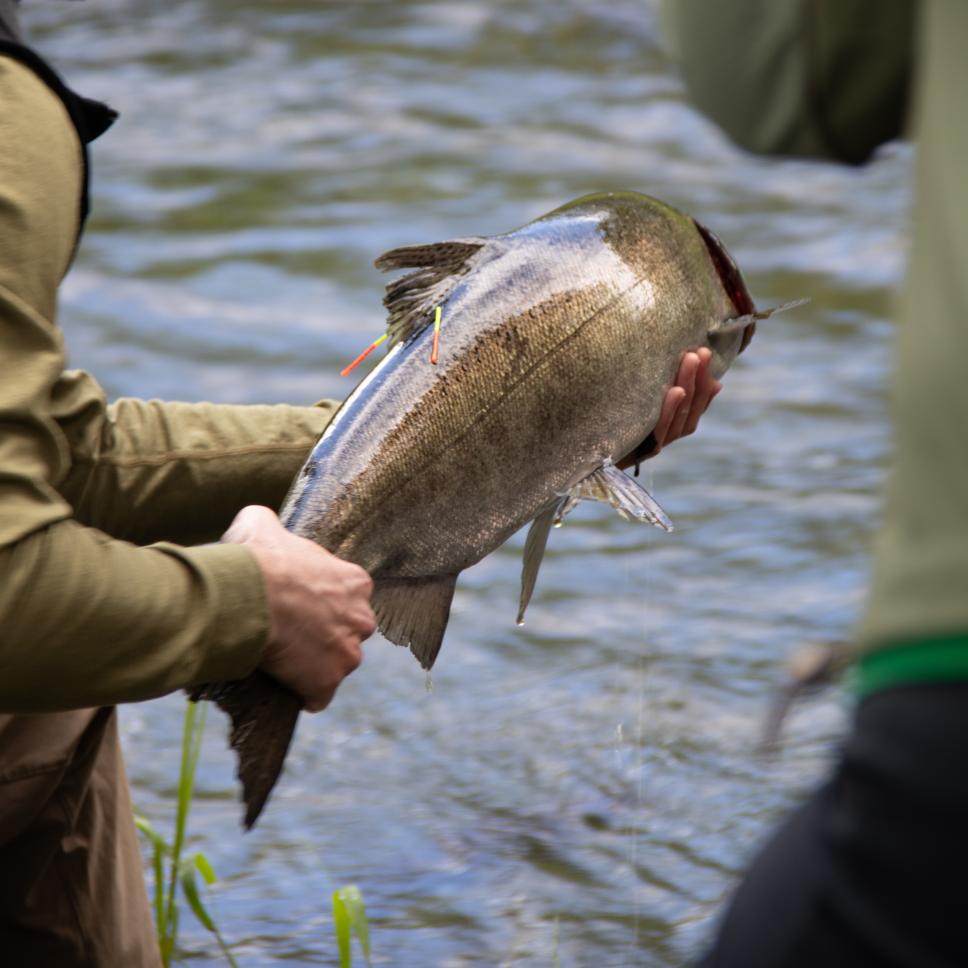
For the Cowlitz Indian Tribe, the celebration was only the beginning. NRD staff are now monitoring how the reintroduced Chinook use the river system, tracking their movement and habitat use to help guide the long-term recovery strategy for this and future populations, several of which are protected under the federal Endangered Species Act. Restoring access for these fish to the upper watershed may also benefit other native fish, including sea-run cutthroat trout, and support the long-term recovery goal of reinstating volitional fish passage throughout the watershed, from the SRS to Spirit Lake. The Tribe's restoration work extends beyond Chinook. In partnership with the Yakama Nation and WDFW, Cowlitz NRD is also leading a Pacific lamprey reintroduction and monitoring effort in the Upper Cowlitz River, where the culturally significant species may have been extirpated due to the Mayfield, Mossyrock and Cowlitz Falls dams. As with the Toutle River Chinook effort, the goal is to return a fish that has long held deep cultural importance to its historical range.
“This is our first foods and rebuilding the first foods and protecting them, so they’ll always be here for future generations,” said Chairman Iyall.
For the Cowlitz Indian Tribe, seeing Chinook salmon return to the Toutle River after more than 40 years is a milestone decades in the making and a reminder of what sustained partnership and stewardship can accomplish for the rivers, the fish and the people who depend on them.