Image
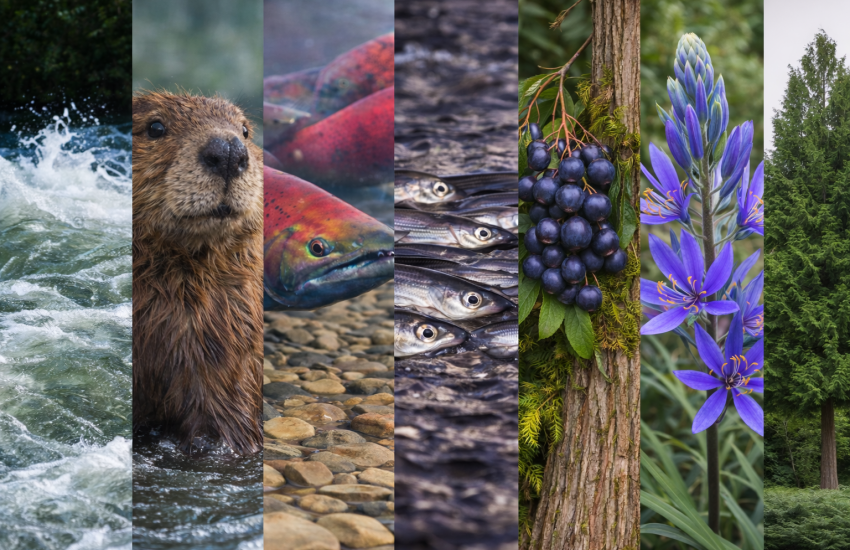
The Cowlitz Indian Tribe has inhabited the Lower Columbia River Basin since time immemorial. Innumerable aspects of Cowlitz culture emerge from the natural landscape. Examples include, but are not limited to:
Hunting, fishing, and gathering foods, medicines, and materials are central to the identity and traditional lifeways of the Tribe.
The Tribe’s Natural Resources Department (NRD) seeks to promote healthy, harvestable plant and animal populations, foster connections with traditional and cultural First Foods, and steward Tribal lands and waters consistent with its Mission / Vision.
To protect, conserve, restore, and promote culturally relevant species and landscapes integral to the unique identity of the Cowlitz People. To further educate the community and inspire future leaders and participants in this vision.
NRD is comprised of five core programs: Fish Distribution, Lands Maintenance, Habitat Restoration & Conservation, Wildlife, and Administration & Policy. These programs work together to advance the Tribe’s natural resource objectives.
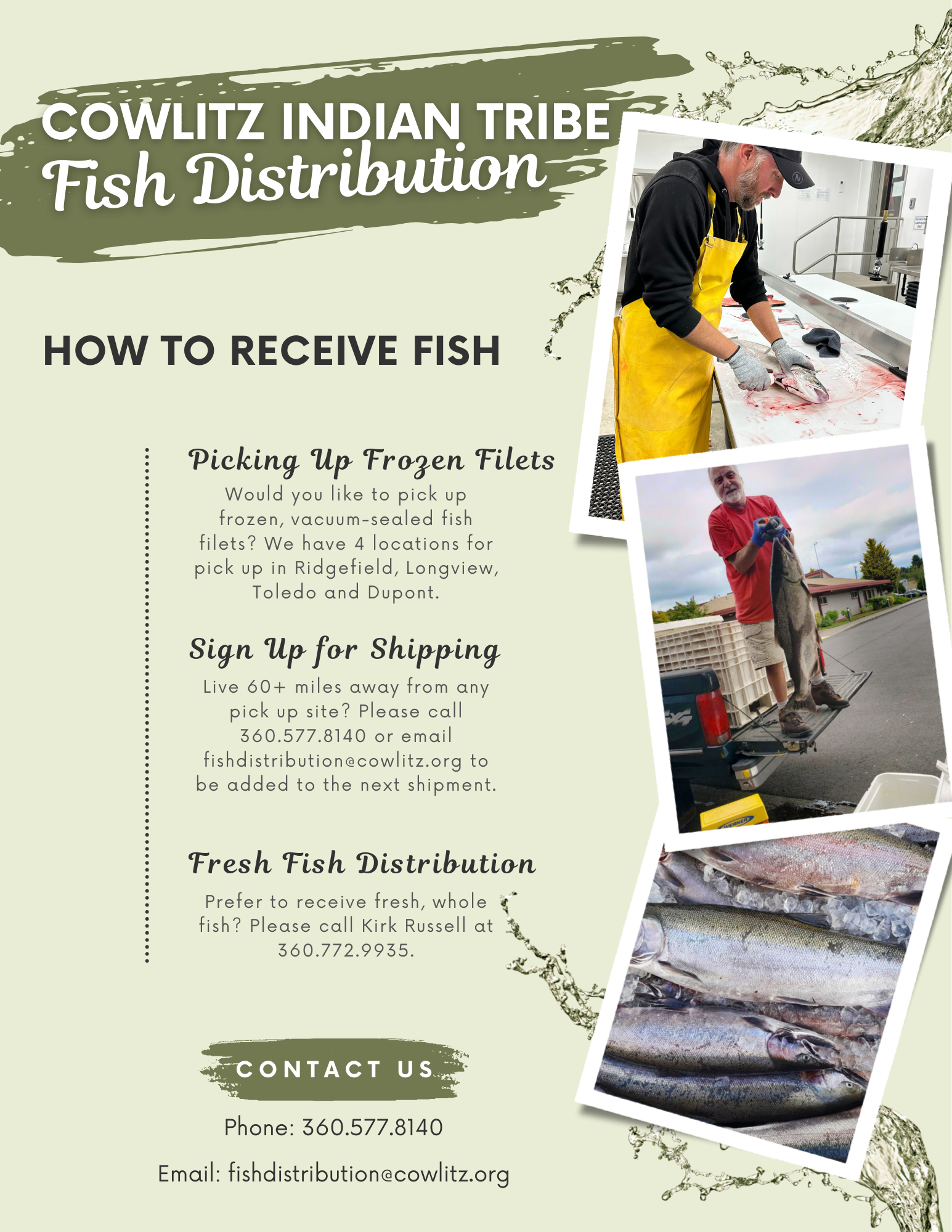
The Fish Distribution Program provides salmon and steelhead from local hatcheries to Cowlitz Tribal members free of charge, directly connecting Tribal membership to a cultural and traditional First Food. This program is one facet of the Tribe’s broader food sovereignty initiative that seeks to revitalize traditional and cultural food practices, reduce food insecurity, promote health and well-being, encourage transfer of intergenerational knowledge, and build community resilience. In addition, we supply fish for cultural events and partner with Health and Human Services to expand access to fish through other programs and activities such as the Annual Elders Fishing Trip.
Tribal members can arrange to pick up fish from Tribal offices in DuPont, Toledo, Longview, or Ridgefield. Those living more than 60 miles from a pickup location can have frozen filets shipped to them.
To sign up to receive fish, request filet shipments, or schedule filet pickups at the Ridgefield, Longview, or Toledo distribution sites, email fishdistribution@cowlitz.org or call (360) 577-8140. To schedule pickup at the DuPont distribution site, call (360) 806-8251. Tribal members are placed on the distribution list in the order requests are received, with priority given to Elders. Each Tribal member can receive up to 10 fresh fish or frozen filets per distribution.
The Lands Maintenance Program provides the Tribe with a variety of services for its more than 1,000 acres of fee-ownership and trust lands. We conduct property maintenance and improvement projects and strive to manage these landholdings for the benefit of current and future generations of Tribal members. We also partner with other programs and departments on joint projects. Additional program activities include mowing, general cleanup, road maintenance, noxious weed control, fence installations, preservation and planting of native species, fire protection, site preparation for cultural events, and more.
The Habitat Restoration & Conservation Program develops, secures grant funds, and implements fish and wildlife habitat restoration projects throughout the Tribe’s Aboriginal territory. Program activities include conservation property acquisition, floodplain reconnection, large wood placement, channel modification, culvert replacement, riparian planting, and dam, levee, and road removal. Most projects are centered on protection and recovery of Endangered Species Act (ESA)-listed species of salmon and steelhead.
The Wildlife Program works with local, state, and federal agencies to develop management actions that support culturally significant animal species and their habitats. We have assisted with the translocation of ESA-listed Columbian white-tailed deer and, we are currently focused on restoring beaver to streams throughout Cowlitz Country. Key activities include beaver reintroduction and habitat inventory, Columbian white-tailed deer translocation, monitoring, and recovery, involvement in public forums and technical workgroups, and other wildlife management activities and research.
The Administration & Policy Program helps to hold all NRD programs together. Administration staff provide critical program support and coordination functions. Policy staff identify, track, and engage on environmental policy issues and work to ensure Tribal Leadership has access to the best available information when making decisions on natural resource matters.
Key activities include partnership- and capacity-building in support of Tribal stewardship goals, review and analysis of actions and proposals affecting Tribal rights and resources, policy and regulatory engagement, intra- and inter-department coordination, personnel management, budget planning/oversight, and other administrative functions.
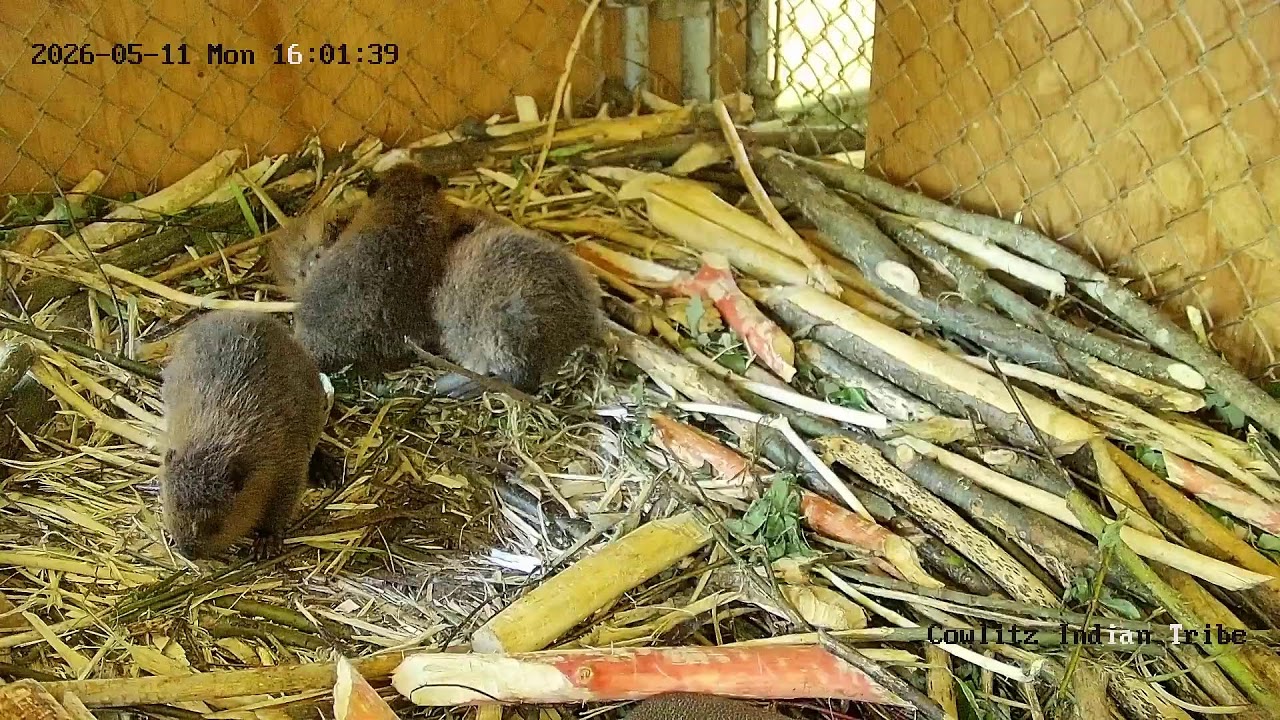
A live look at our beaver kits and their habitat, brought to you by the Cowlitz Indian Tribe Natural Resources Department.
Hosted on YouTube. The stream will open in a new tab.